AI Developer Assistant

Transforming developer productivity through intelligent AI assistance, addressing critical friction points in the development lifecycle and driving measurable improvements in developer experience.

Role

Product Design, UX Strategy, UX Research

Team

Developers, UX Content Specialists

Tools

FDovetail, PowerPoint, Excel, Yammer, ChatGPT, Figma, Miro, Jira, GitHub Loop

Executive Summary

Led the creation of a Retrieval-Augmented Generation (RAG) database powered by Generative AI to improve Developer Experience Assessment (DXA) scores from 59% to 75%. This initiative addressed critical developer productivity bottlenecks through intelligent automation and contextual assistance, resulting in significant improvements in findability and learnability metrics.

50%
Reduction in Findability Issues
75%
Improvement in Learnability
16%
DXA Score Improvement
500+
Targeted Support Questions
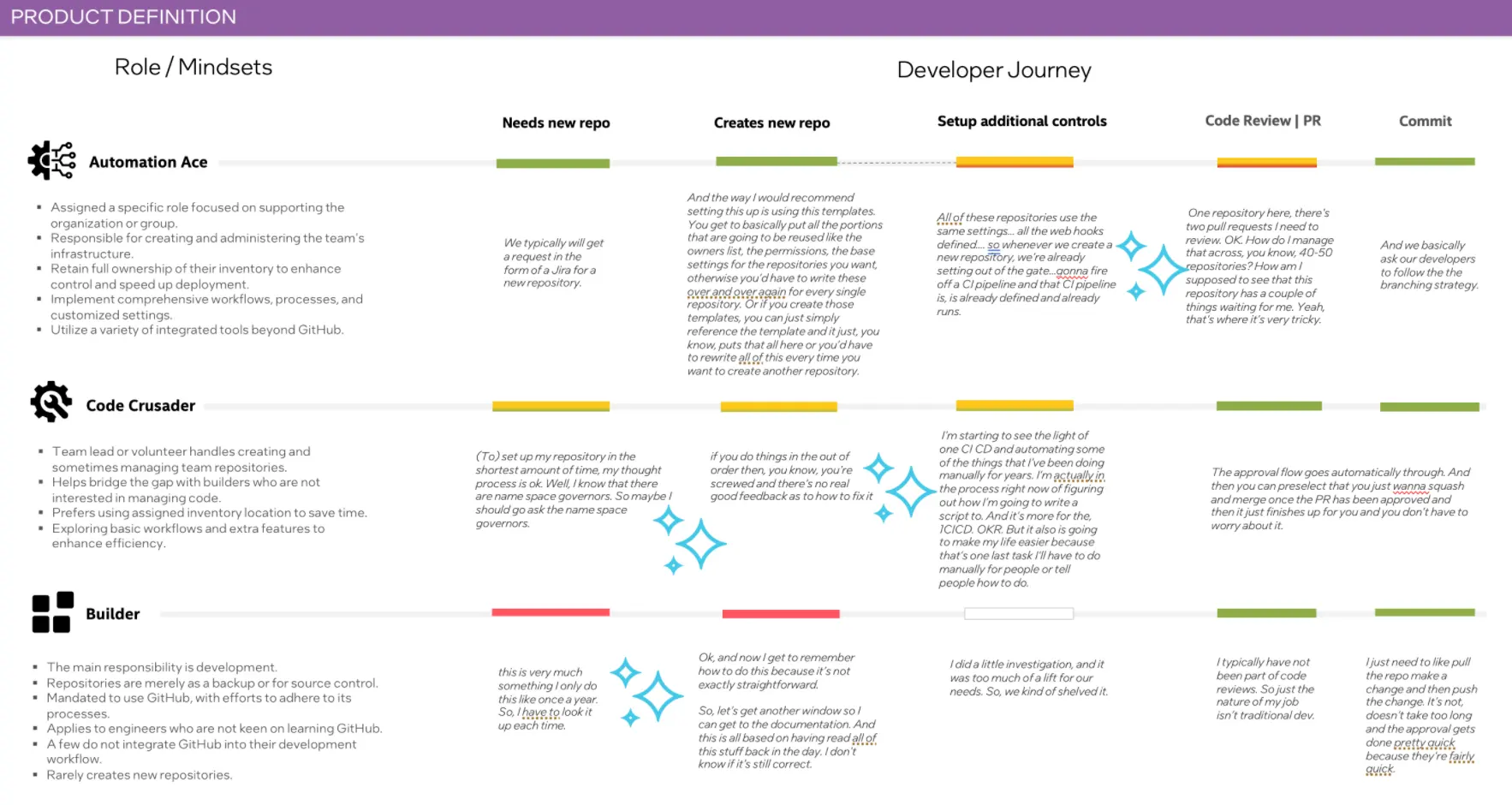
The Tension Points

Developer Productivity Crisis

Engineering teams were losing up to 4 days per developer on setup tasks alone, with complex onboarding processes and scattered documentation creating significant friction. The trial-and-error approach to self-support was stalling innovation and reducing overall team velocity.

Business Impact of Poor DX

A 59% DXA score indicated critical gaps in developer experience, directly impacting time-to-market, code quality, and team retention. The lack of centralized support was creating knowledge silos and inconsistent development practices across teams.

AI Integration Opportunity

While AI tools were emerging in the market, there was no systematic approach to integrating AI assistance into the development workflow. The opportunity existed to leverage AI to solve real developer pain points rather than just adding another tool to the stack.

Strategic Approach

Research-Driven AI Integration

Rather than building AI for AI's sake, I led a comprehensive analysis of 13,000+ support tickets and Yammer conversation threads to identify the most impactful use cases for AI assistance. This data-driven approach ensured we solved real problems rather than perceived ones.

Ecosystem-First Design

The solution was designed to integrate seamlessly with existing developer tools and workflows, rather than requiring developers to adopt a new platform. This ecosystem approach maximized adoption and minimized friction.

Responsible AI Framework

Developed a comprehensive scorecard to measure AI assistant usefulness and ensure responsible AI practices. This framework balanced automation with human oversight and maintained developer agency.

Process & Methodology

Research & Discovery

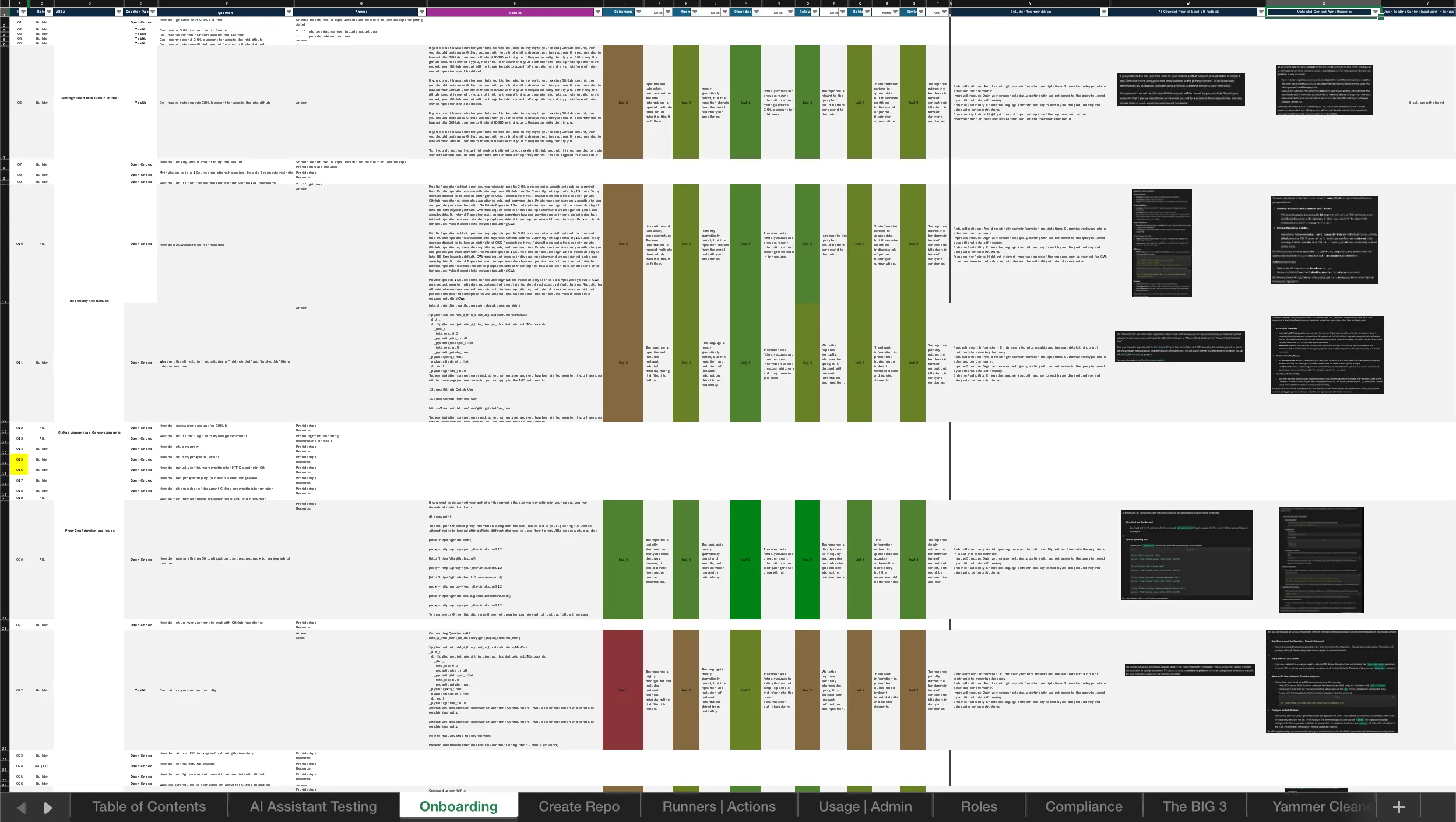
Conducted comprehensive DXA assessment and analyzed 13,000+ support tickets using ChatGPT for privacy-preserving insight extraction. Created custom scripts to process data and generate targeted support questions.

Design & Iteration

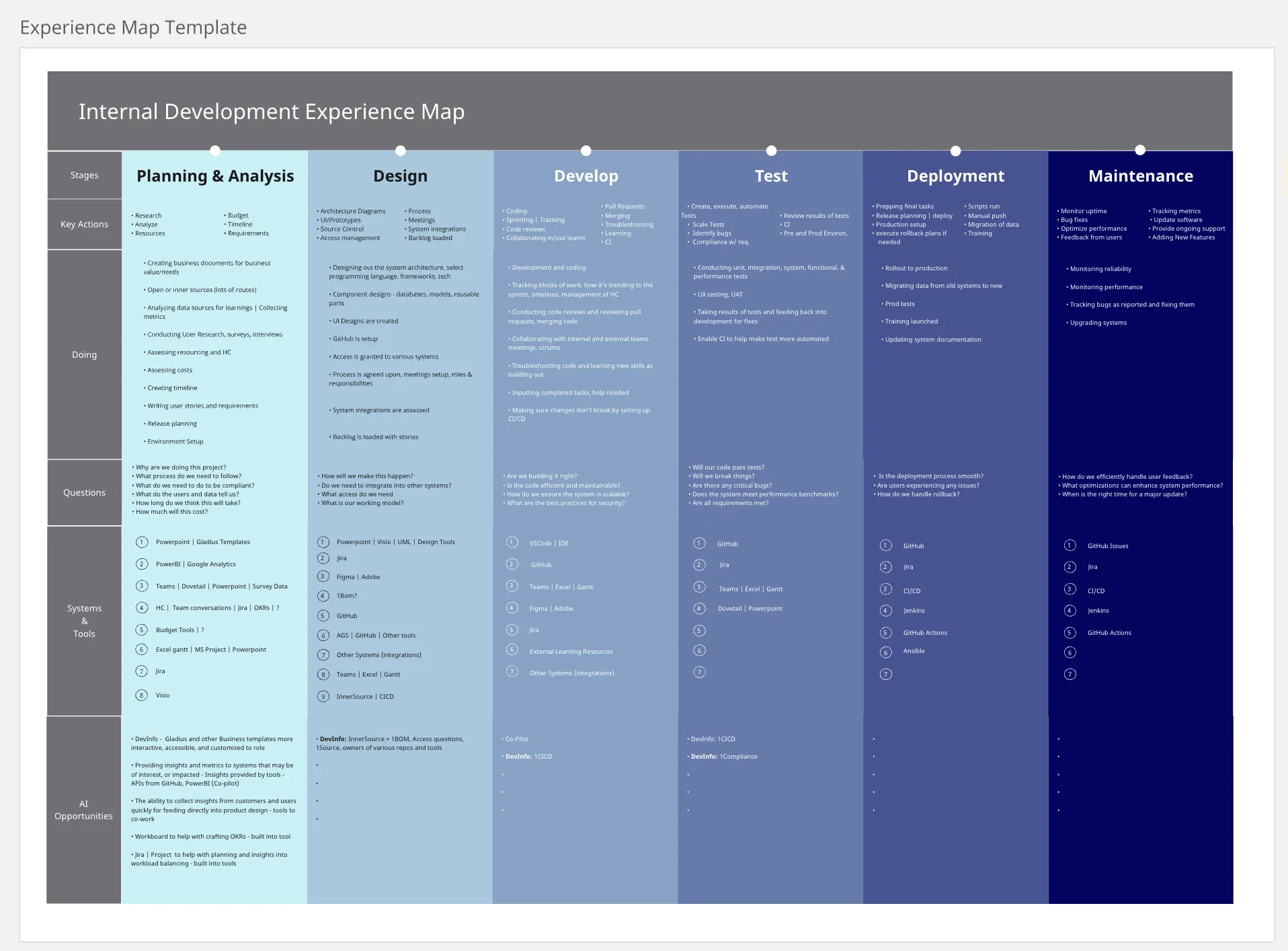
Developed 500+ targeted support questions aligned with real developer workflows. Built Responsible AI scorecard and created experience maps in Figma/Miro to visualize the end-to-end journey.

Implementation & Results

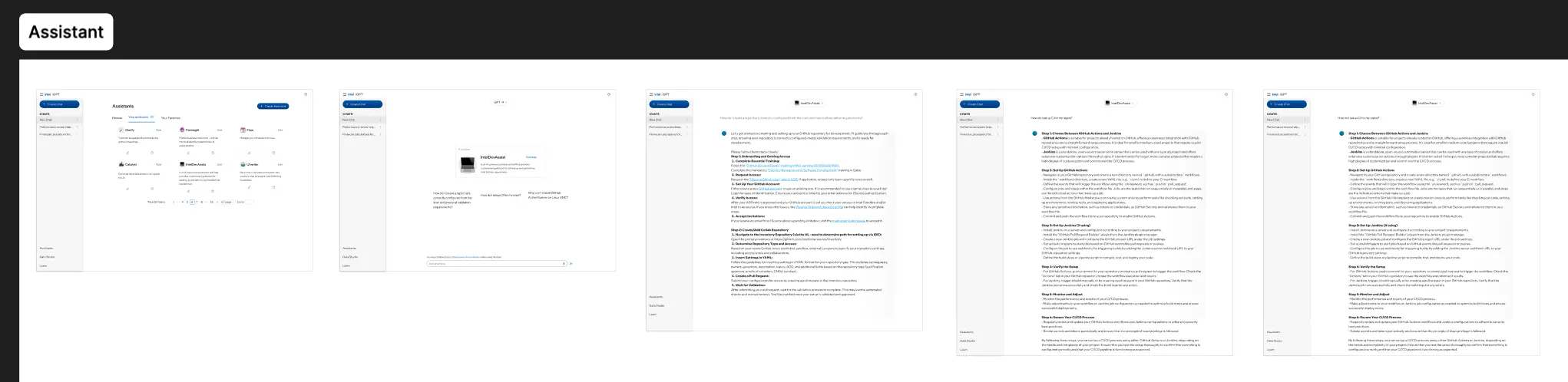
Tested RAG-powered AI system with real user testing and refinement. Managed work across Jira/GitHub with documentation in Loop. Timing within internal GPT capabilities allowed for porting of work into larger ecosystem.

Impact

Developer Workflow Integration

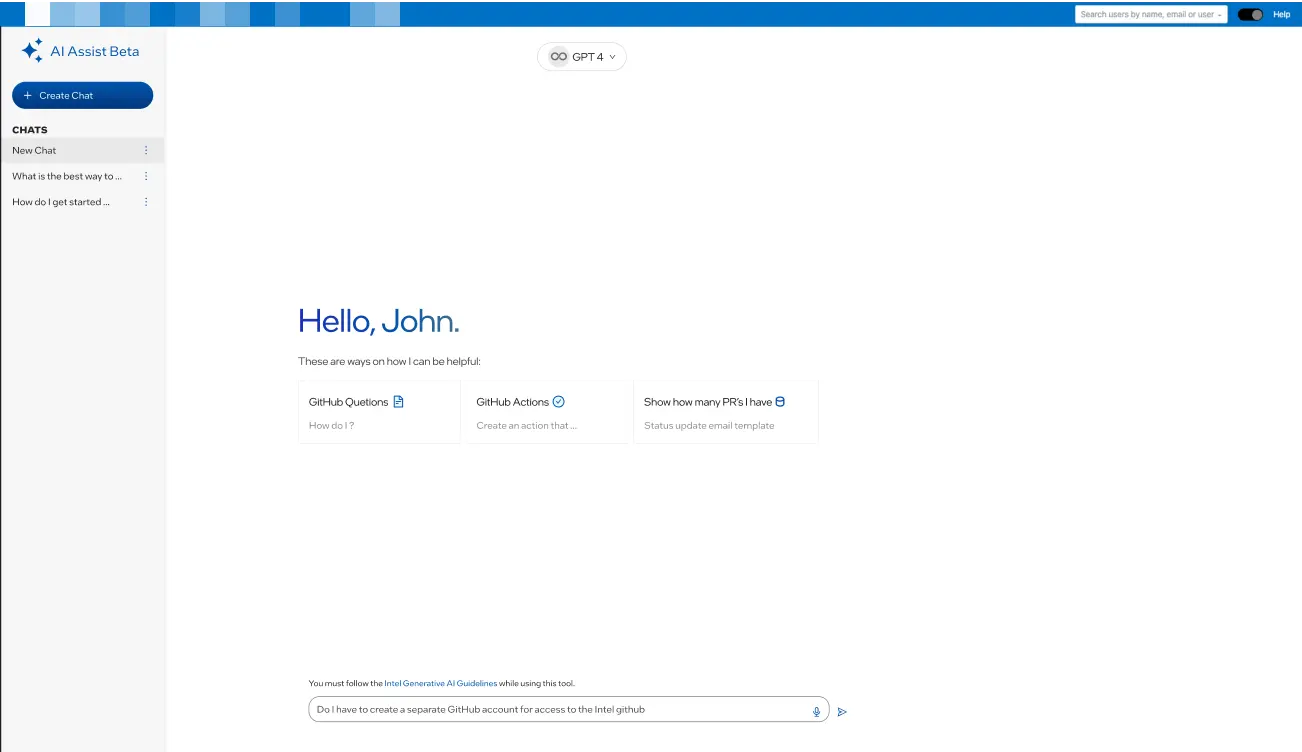
The AI assistant was designed to integrate seamlessly with existing workflows, providing contextual assistance without disrupting established development processes. This integration approach ensured high adoption rates and minimal learning curves.

Before AI Assistant

  • Manual documentation search
  • Trial-and-error debugging
  • Fragmented knowledge sharing
  • 4-day setup delays

After AI Assistant

  • Intelligent context-aware responses
  • Proactive issue resolution
  • Centralized knowledge access
  • Streamlined onboarding

Visual Assets

Tools & Technologies

Figma

Design & Prototyping

AI/ML

RAG Database & ChatGPT

Development

GitHub, Jira, Loop

Analytics

Dovetail, Excel