Led the creation of the first-ever Developer Experience Assessment (DXA) methodology specifically designed for AI-driven developer tools. This initiative combined the Honeycomb Framework, Google H.E.A.R.T, and ISO 9241-11 standards to evaluate GitHub Copilot's effectiveness across diverse engineering teams, providing data-backed insights that transformed adoption strategies and set new company-wide standards for AI tool evaluation.
Executive Summary
The Tension Points
Uncertain AI Tool Impact
Organizations lacked systematic ways to measure the effectiveness and ROI of AI-powered developer tools like GitHub Copilot. Traditional metrics failed to capture the nuanced developer experience with AI tools, leaving gaps in understanding true effectiveness.
Developer Adoption Challenges
Engineering teams struggled with inconsistent adoption patterns and unclear success metrics for AI tool integration. Evaluating Copilot across diverse engineering roles, domains, and geographies required a scalable, consistent methodology.
Missing Assessment Framework
No standardized methodology existed to evaluate AI-driven developer experience tools across different organizations and teams. No existing framework specifically addressed the unique challenges of assessing AI-powered developer tools.
Strategic Approach
Framework Integration
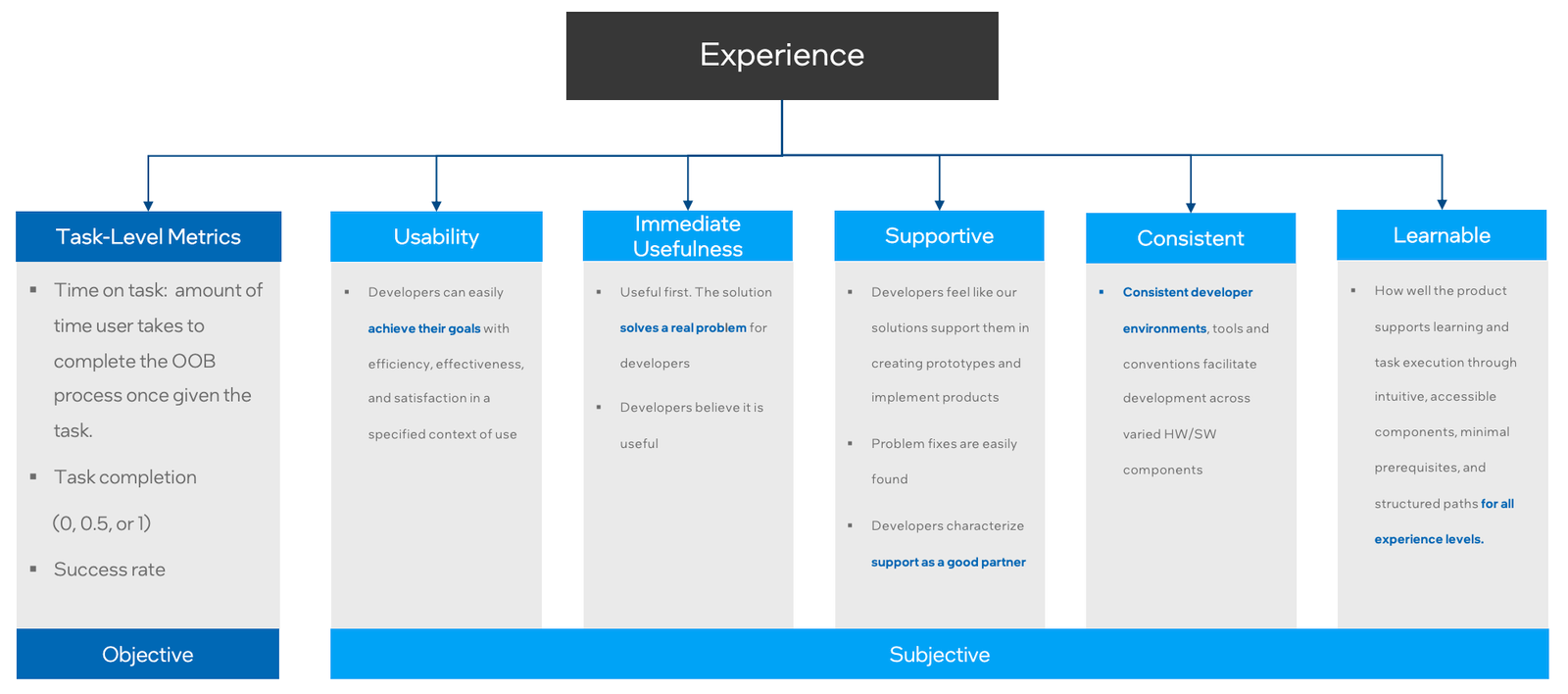
Combined Honeycomb Framework, Google H.E.A.R.T, and ISO 9241-11 standards to create a comprehensive evaluation methodology. This bridge between established UX methodologies and AI-specific evaluation criteria was crucial for creating a robust assessment tool.
AI-Specific Metrics Development
Developed specialized metrics and evaluation criteria specifically designed for AI-powered developer tools. This approach ensured the assessment captured the unique characteristics and challenges of AI tool adoption.
Global Assessment Validation
Conducted assessments across diverse engineering teams to validate the framework's effectiveness and applicability. This global approach ensured the methodology could scale across different organizations and team structures.
Process & Methodology
Research & Framework Development
Analyzed existing UX frameworks and developed a comprehensive methodology specifically for AI developer tools. Leveraged existing company-wide survey data to identify diverse participants and create tailored testing scenarios.
Assessment Implementation
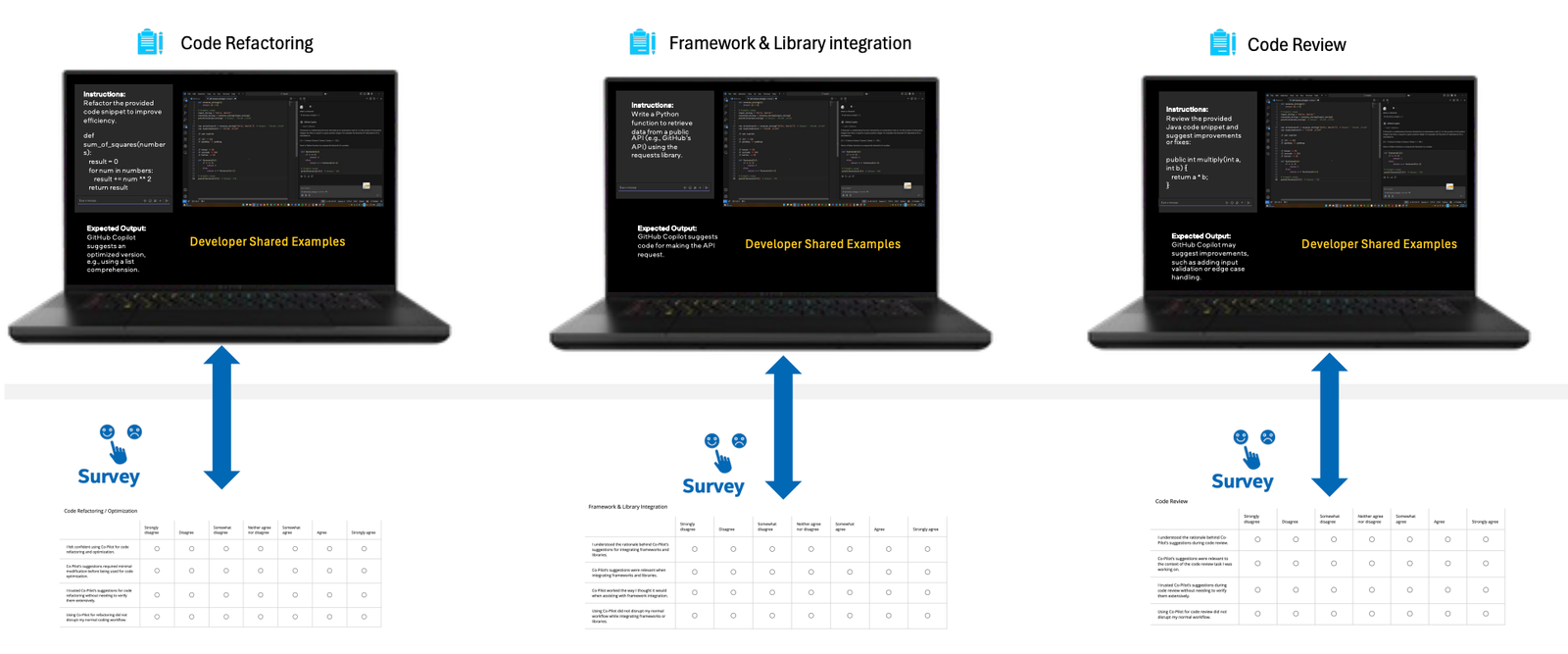
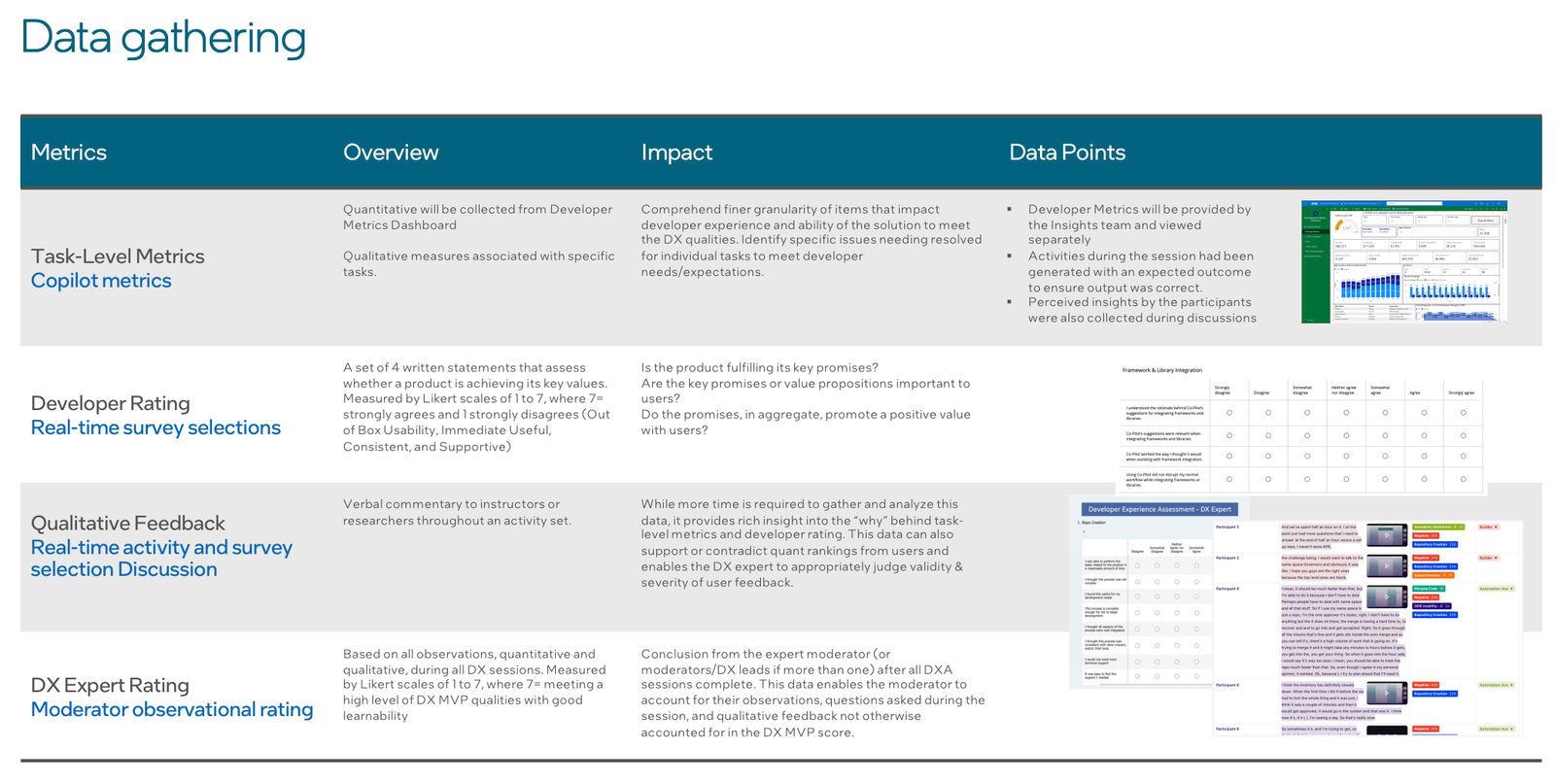
Implemented the DXA framework across multiple engineering teams to evaluate GitHub Copilot effectiveness. Designed structured testing sessions with task-based Copilot usage and comprehensive post-session evaluation.
Data Analysis & Insights
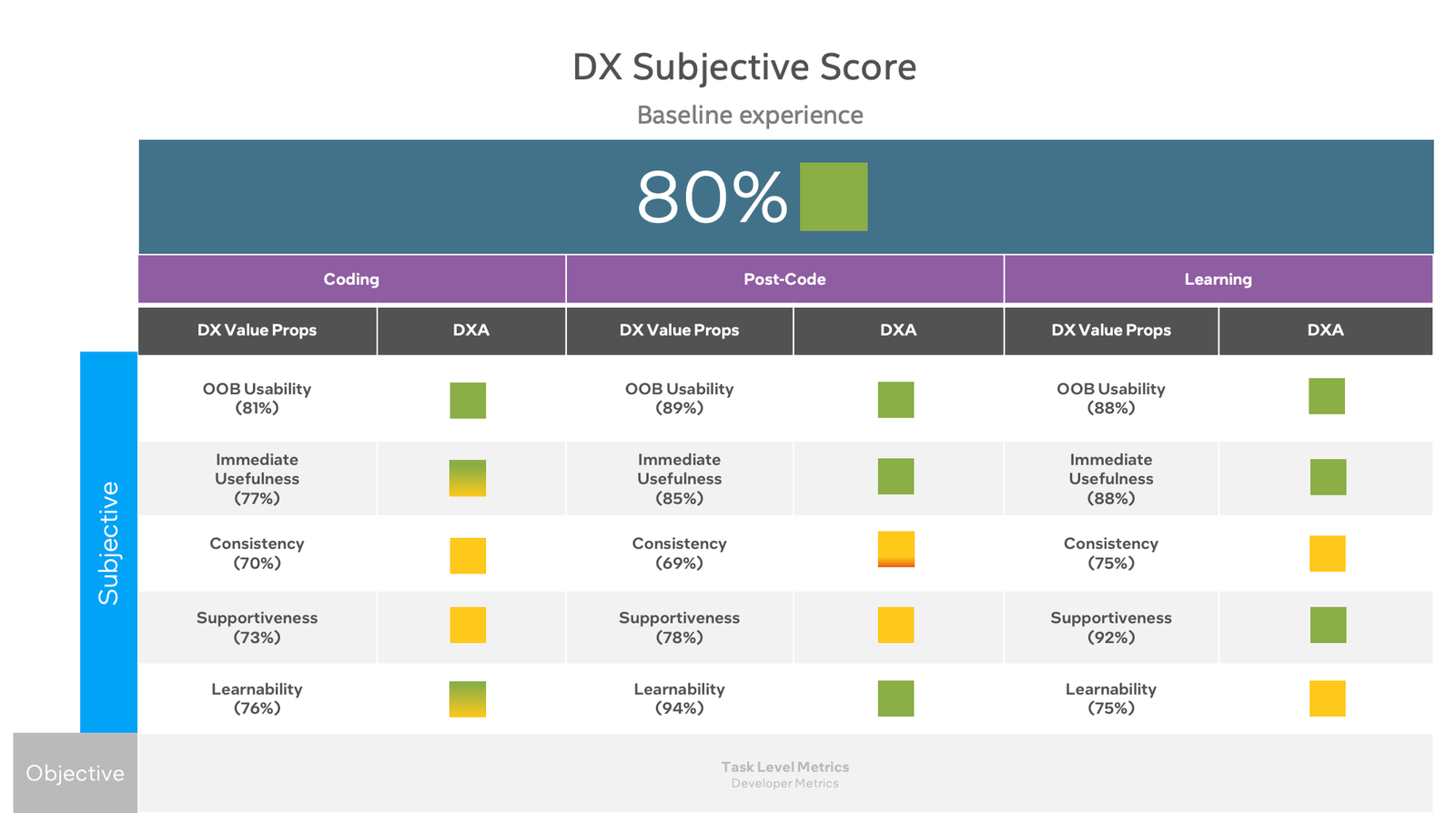
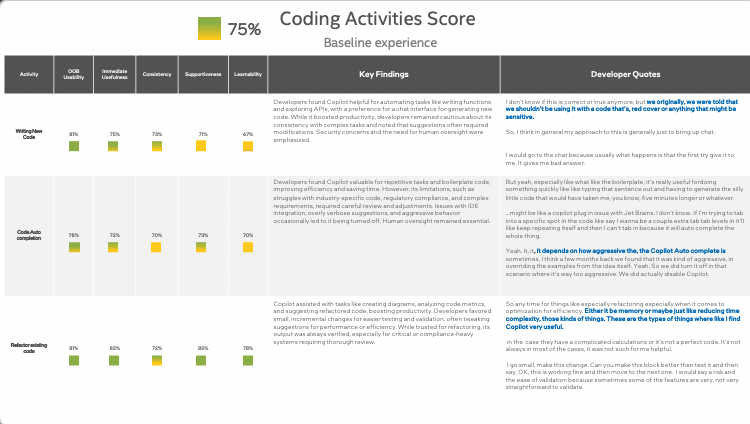
Analyzed assessment results to provide actionable insights and recommendations for AI tool adoption. Compiled detailed scorecards and actionable recommendations for senior leadership, enabling data-driven adoption strategies.
Impact
Developer Experience Assessment Transformation
The CopilotDXA framework fundamentally changed how organizations evaluate and adopt AI-powered developer tools by providing standardized, data-backed assessment methodologies. This ecosystem integration ensured AI tool evaluation became a systematic, evidence-based process.
Before DXA Framework
- No evaluation methods for AI tools
- Only survey data from small segments of the company
- No adoption insights
- No standardized approach
After DXA Framework
- Systematic assessment methodology
- Adoption from 8% - 54% within 6 months
- Data-driven adoption strategies
- Framework leveraged by rest of the company
Visual Assets
Developer Experience Assessment framework breakdown and methodology overview
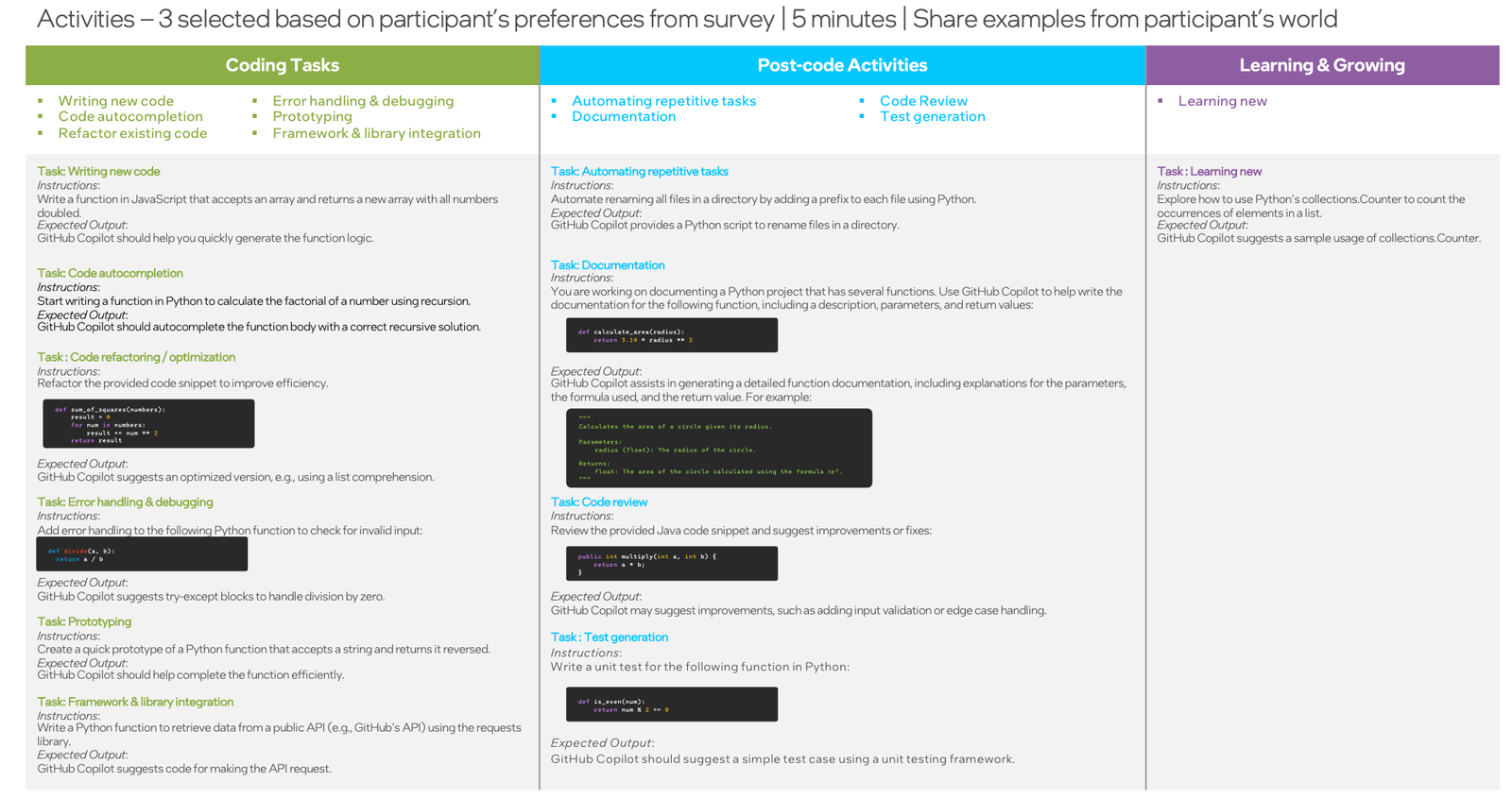
Assessment activities and evaluation criteria for AI developer tools
Assessment flow and process mapping for DXA implementation
Detailed scorecard showing performance across all UX dimensions
Comprehensive report with actionable insights and strategic recommendations
Data analysis and insights visualization for assessment results
Tools & Technologies
Dovetail
Qualitative Analysis
VSCode
Development Environment
GitHub Copilot
AI Tool Evaluation
Excel
Data Processing