This workshop introduced new UX methods for visualizing and addressing the environmental impact of digital products. By educating both internal teams at Intel and external participants at Elisava Barcelona School of Design, the initiative aimed to raise awareness among designers and developers about the hidden environmental costs of digital experiences. The effort culminated in a published article on Bootcamp on Medium, titled Applying UX methods to uncover and depict the environmental impact of digital products.
Executive Summary
My Medium Article
Applying UX methods to uncover and depict the environmental impact of digital products
Read the Medium article published on the workshop in Bootcamp, exploring how UX methods can be used to visualize and understand the environmental impact of digital products.
Read ArticleThe Tension Points
Environmental Impact Blindness
The environmental impact of digital products is often overlooked in the design process, with traditional UX methods not equipped to reveal or evaluate energy consumption and environmental costs.
Missing Sustainable Design Tools
Designers and developers lack actionable tools and approaches to understand and mitigate the environmental effects of their work, leaving a critical gap in sustainable design thinking.
Limited Environmental Transparency
Only 30% of top digital applications disclose environmental pledges, making it difficult to assess and compare the sustainability impact of different digital products and services.
Strategic Approach
Environmental Impact Assessment Framework
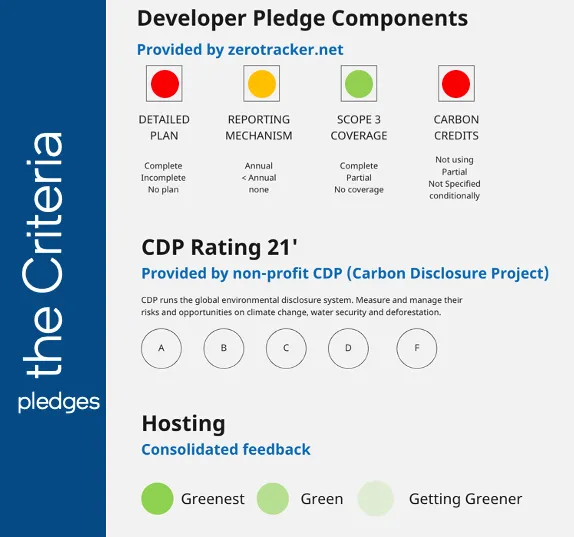
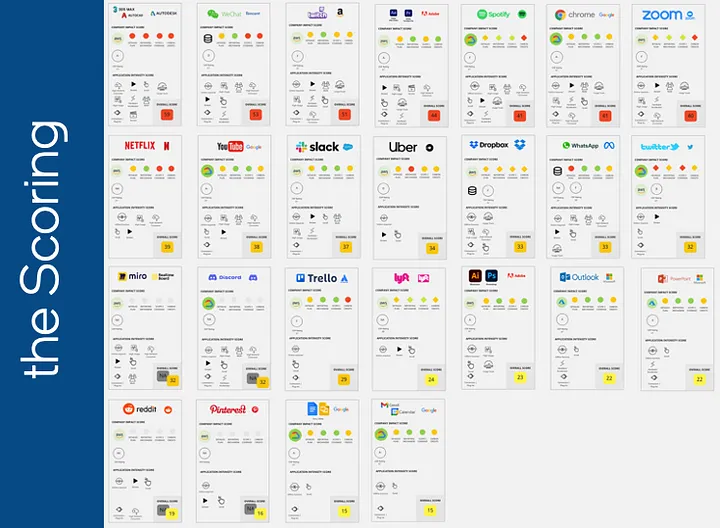
Developed a comprehensive scoring system to evaluate 25 popular applications across 10+ environmental-impact attributes, creating a visual representation of digital product sustainability.
Journey Mapping Integration
Integrated environmental impact data with user journey maps to visualize energy consumption patterns throughout daily digital activities, revealing peak impact moments.
Interactive Workshop Methodology
Created interactive digital workshop formats that enable designers and developers to understand and address environmental impact through hands-on collaboration and visualization.
Process & Methodology
Research & Discovery
Identified key gaps in how environmental impact is currently addressed in digital product design. Conducted background research on digital carbon footprints and sustainability metrics, using Excel to organize supporting data.
Design & Iteration
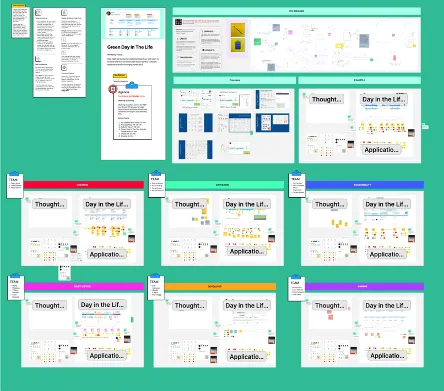
Developed a hands-on workshop format using journey mapping and impact assessments to connect design decisions with energy use. Designed an interactive activity in FigJam to help participants visualize user behavior and associated environmental costs.
Implementation & Results
The workshop was conducted internally at Intel and externally at Elisava School of Design, successfully raising awareness and equipping participants with practical tools. Insights and methods were shared in a widely read article on Bootcamp on Medium.
Impact
Environmental Awareness & Education
The digital workshop successfully raised awareness about environmental impact in digital product design, equipping participants with practical tools and methodologies to assess and reduce their digital carbon footprint.
Before the Workshop
- Limited awareness of digital carbon impact
- No systematic approach to environmental assessment
- Design decisions made without sustainability consideration
- Lack of practical tools for impact measurement
After the Workshop
- Increased environmental consciousness in design
- Practical frameworks for impact assessment
- Sustainability integrated into design decisions
- Tools and methods for ongoing measurement
Visual Assets
Interactive Figma workshop board for collaborative learning and ideation
Digital scorecard and assessment tools for workshop outcomes
Comprehensive learning scorecards and progress tracking
Tools & Technologies
Figjam
Interactive Design
Miro
Collaborative Boards
Digital Tools
Collaboration Platform
Facilitation
Workshop Methods